 Image 1 of 2
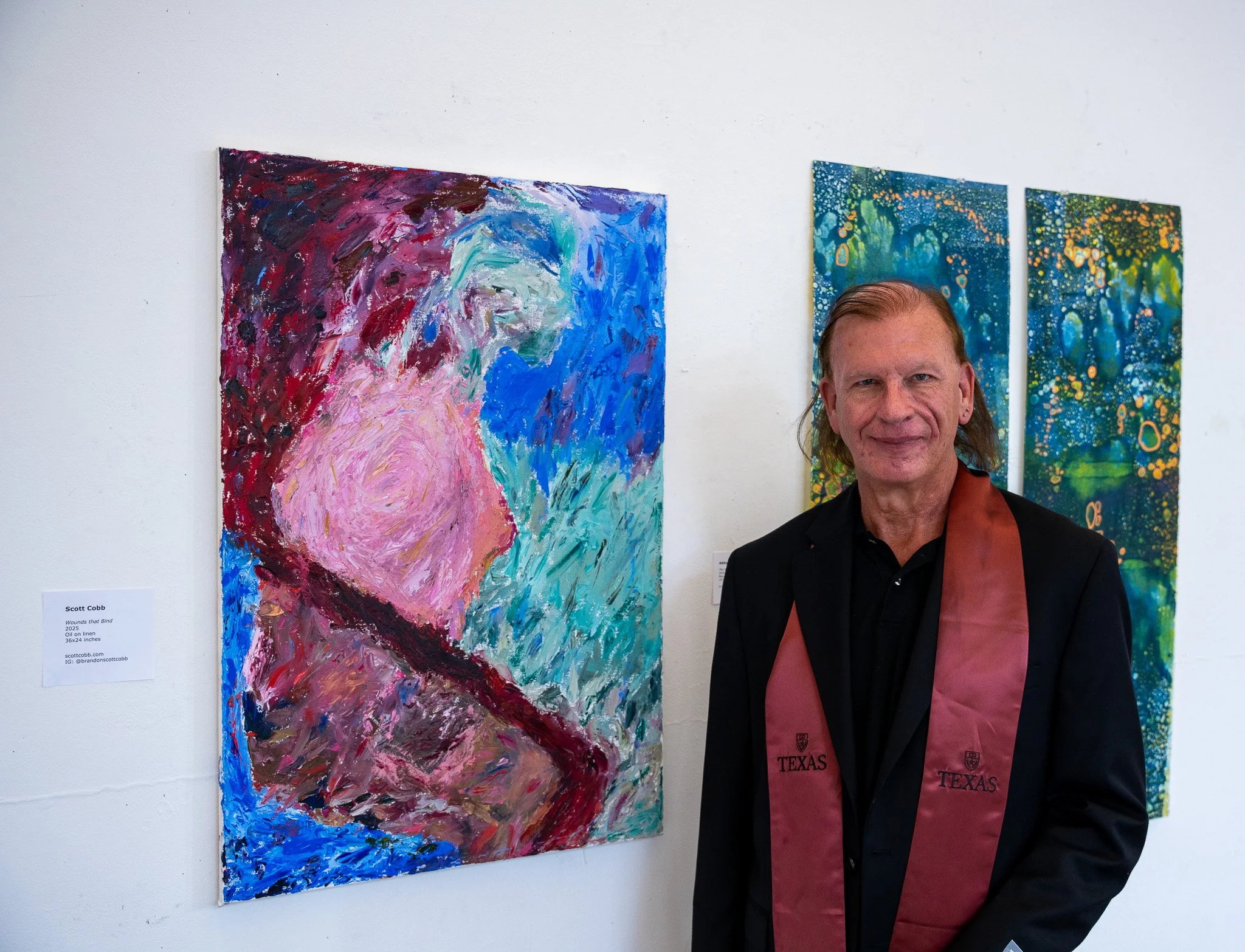 Image 2 of 2
Original painting. Oil on linen. 36x24 inches. 2025.
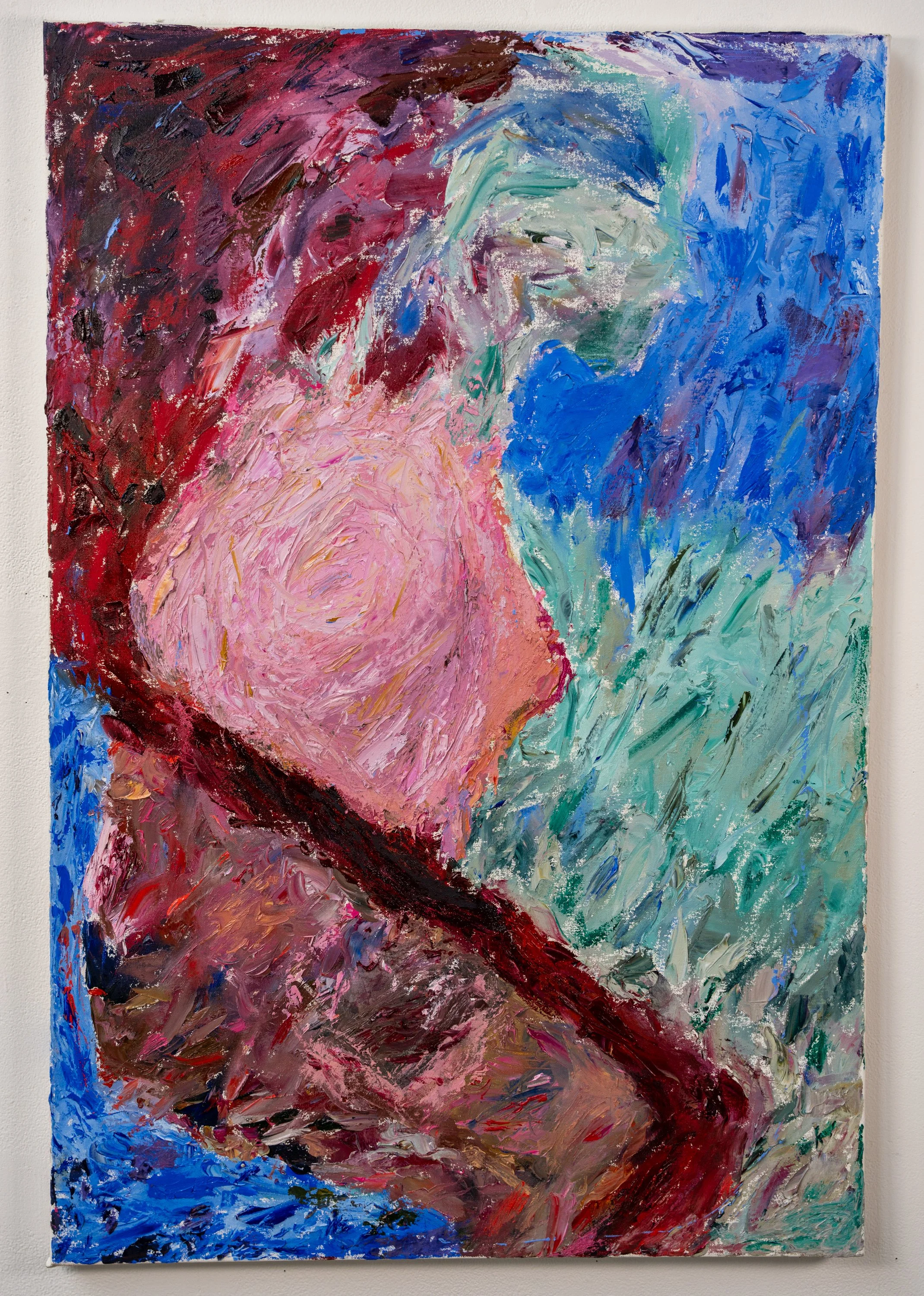
Wounds That Bind explores the way rupture can become structure. It is about how people in relationships can hurt each other, but they remain bound together. The painting is organized around a large pink circular form, held within a field of blue, green, red, and violet. A dark red diagonal cuts through the composition, but it also connects the parts of the image, creating a line of pressure that binds the painting together.
The work is built through dense layers of gesture, scraping, and impasto. Paint gathers into ridges and scars, while thinner passages allow the canvas to breathe. The surface feels active and exposed, as if the image has been formed through repeated acts of damage, repair, and return.
The central pink form suggests flesh, bloom, organ, planet, or shelter. It is tender but not fragile. Around it, cooler blues and greens create a shifting atmosphere, while the darker reds and purples introduce weight and gravity. The painting moves between abstraction and bodily association without resolving into a single image.
In Wounds That Bind, injury is not only a mark of separation; it becomes a site of attachment. The painting asks how forms hold together after being opened, crossed, or altered. Its beauty comes from that tension: the coexistence of softness and force, fracture and cohesion, vulnerability and persistence.
Original painting. Oil on linen. 36x24 inches. 2025.
Wounds That Bind explores the way rupture can become structure. It is about how people in relationships can hurt each other, but they remain bound together. The painting is organized around a large pink circular form, held within a field of blue, green, red, and violet. A dark red diagonal cuts through the composition, but it also connects the parts of the image, creating a line of pressure that binds the painting together.
The work is built through dense layers of gesture, scraping, and impasto. Paint gathers into ridges and scars, while thinner passages allow the canvas to breathe. The surface feels active and exposed, as if the image has been formed through repeated acts of damage, repair, and return.
The central pink form suggests flesh, bloom, organ, planet, or shelter. It is tender but not fragile. Around it, cooler blues and greens create a shifting atmosphere, while the darker reds and purples introduce weight and gravity. The painting moves between abstraction and bodily association without resolving into a single image.
In Wounds That Bind, injury is not only a mark of separation; it becomes a site of attachment. The painting asks how forms hold together after being opened, crossed, or altered. Its beauty comes from that tension: the coexistence of softness and force, fracture and cohesion, vulnerability and persistence.