 Image 1 of 2
 Image 2 of 2
Oil on canvas. 48x35 inches 2025.
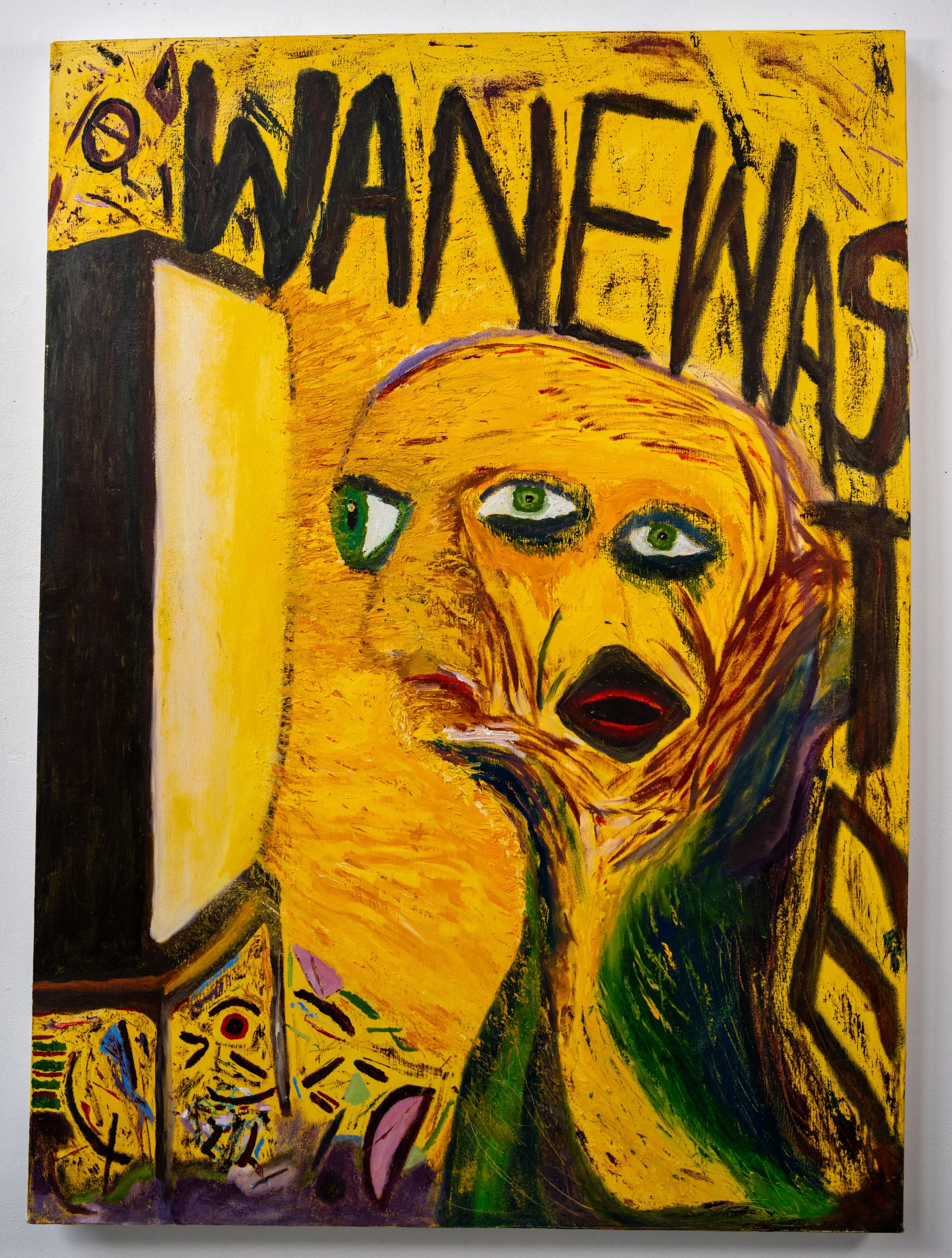
Wanewaste takes its atmosphere from T. S. Eliot’s The Love Song of J. Alfred Prufrock: its hesitation, self-consciousness, urban fatigue, and sense of a mind turning against itself. The painting translates the poem’s nervous interior voice into color, figure, and damaged language. It is a portrait of psychological and social paralysis and the life un-lived.
The saturated yellow field creates an anxious brightness, like artificial light or a warning surface. Across it, the word “WANEWASTE” appears as a fractured sign—part title, part graffiti, part misheard phrase. It suggests decline, residue, and the slow, sad exhaustion of meaning.
Oil on canvas. 48x35 inches 2025.
Wanewaste takes its atmosphere from T. S. Eliot’s The Love Song of J. Alfred Prufrock: its hesitation, self-consciousness, urban fatigue, and sense of a mind turning against itself. The painting translates the poem’s nervous interior voice into color, figure, and damaged language. It is a portrait of psychological and social paralysis and the life un-lived.
The saturated yellow field creates an anxious brightness, like artificial light or a warning surface. Across it, the word “WANEWASTE” appears as a fractured sign—part title, part graffiti, part misheard phrase. It suggests decline, residue, and the slow, sad exhaustion of meaning.