 Image 1 of 3
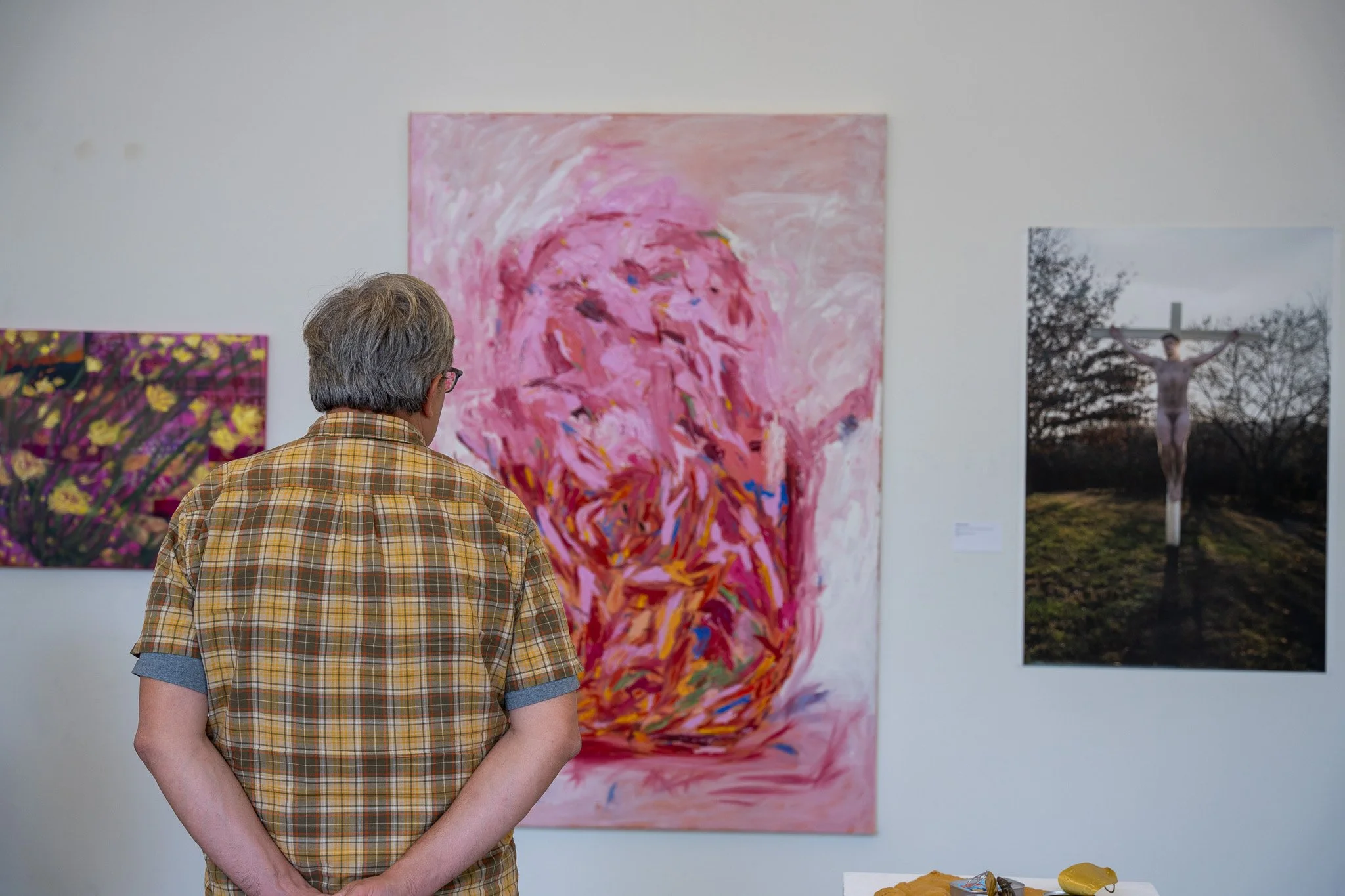 Image 2 of 3
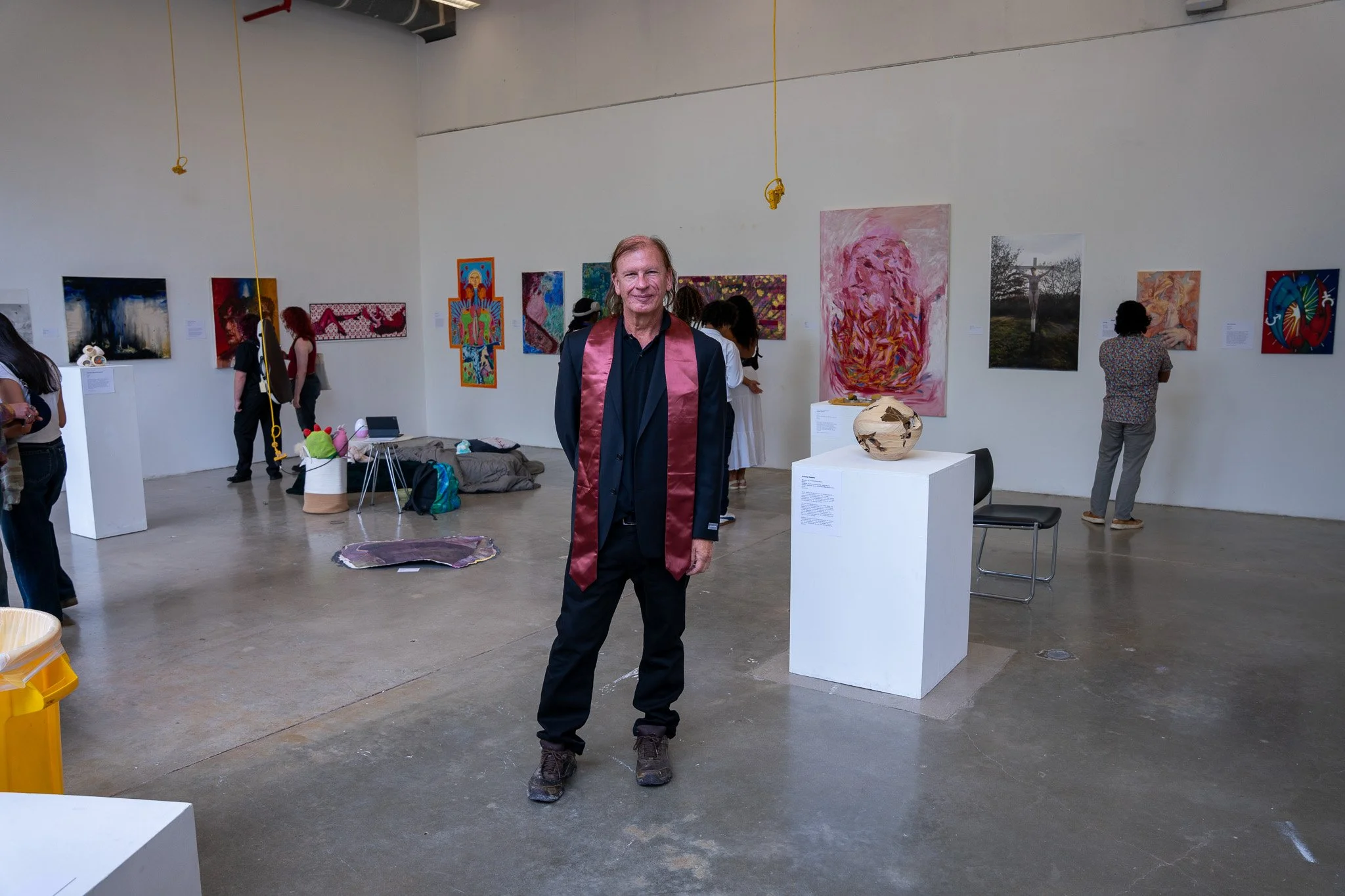 Image 3 of 3
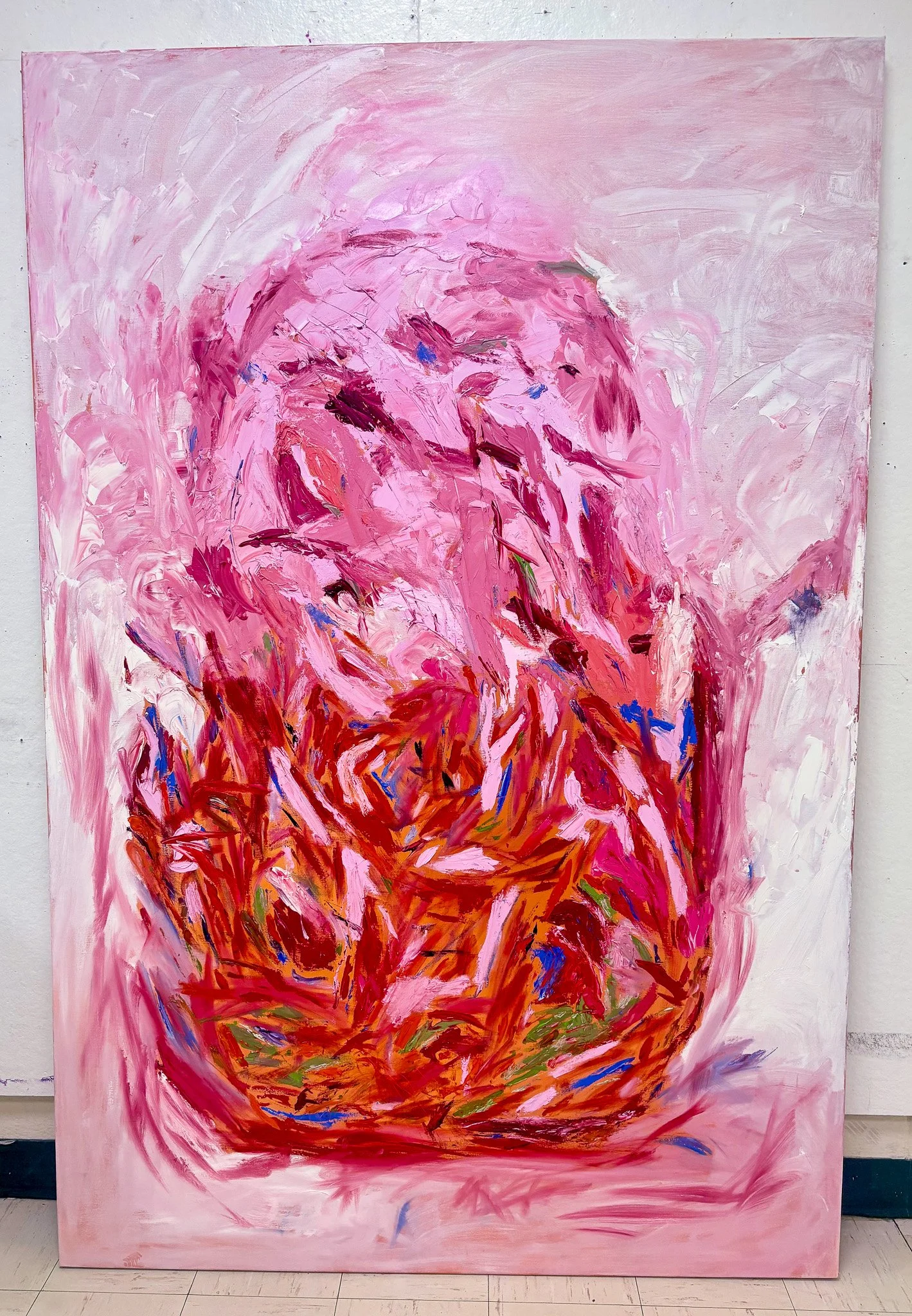
Original painting. Oil on canvas. 72x60 inches. 2025.
afterbloom is a painting about excess, release, and the fragile blooming life of color after a traumatic event has passed. The central form rises from a dense base of reds, oranges, yellows, blues, and greens into a softer pink field, suggesting something organic that has opened, collapsed, and continued to transform. It reads as flower, body, flame, nest, or remnant without becoming any one thing completely.
The painting is built through movement. Marks gather, flare, and fold back into one another, creating a form that feels both lush and unstable. The lower half is dense and heated, while the upper portion becomes more porous and atmospheric, as if the image is moving from combustion into breath.
Pink dominates the work, but it is not passive. It becomes flesh, vapor, light, and pressure. Against it, sharper reds and oranges create urgency, while small flashes of blue, green, and yellow keep the surface alive. The painting’s energy comes from this tension between softness and intensity.
afterbloom holds the moment after fullness: after growth, after rupture, after display. It is not a still life but a state of transformation, where beauty remains inseparable from exhaustion, residue, and renewal.
Original painting. Oil on canvas. 72x60 inches. 2025.
afterbloom is a painting about excess, release, and the fragile blooming life of color after a traumatic event has passed. The central form rises from a dense base of reds, oranges, yellows, blues, and greens into a softer pink field, suggesting something organic that has opened, collapsed, and continued to transform. It reads as flower, body, flame, nest, or remnant without becoming any one thing completely.
The painting is built through movement. Marks gather, flare, and fold back into one another, creating a form that feels both lush and unstable. The lower half is dense and heated, while the upper portion becomes more porous and atmospheric, as if the image is moving from combustion into breath.
Pink dominates the work, but it is not passive. It becomes flesh, vapor, light, and pressure. Against it, sharper reds and oranges create urgency, while small flashes of blue, green, and yellow keep the surface alive. The painting’s energy comes from this tension between softness and intensity.
afterbloom holds the moment after fullness: after growth, after rupture, after display. It is not a still life but a state of transformation, where beauty remains inseparable from exhaustion, residue, and renewal.